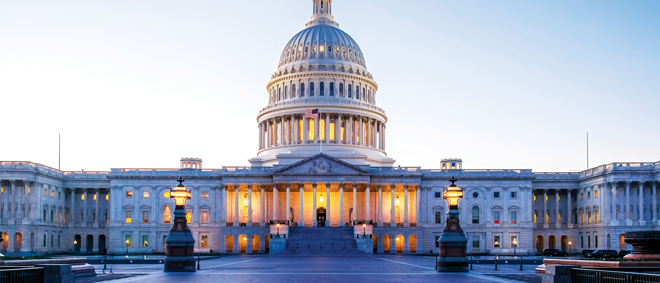
On January 22, 2026, House Representatives Madeleine Dean (D-PA) and Nathaniel Moran (R-TX) introduced H.R. 7209, a bipartisan bill that could significantly reshape the relationship between copyright law and artificial intelligence. Known as the Transparency and Responsibility for Artificial Intelligence Networks (TRAIN) Act, the proposal seeks to give copyright owners a clearer path to understanding whether—and how—their works are being used to train generative AI models.Continue Reading New House Bill on AI Transparency Aims to Pull Back the Curtain on AI Training Data

Another class action lawsuit—Cruz v. Fireflies.AI Corp.—puts a spotlight on potential legal risks associated with AI meeting assistants. The complaint alleges that the Fireflies tool records, analyzes, transcribes, and stores voices of meeting participants, including voices of those who are not Fireflies users, without the notice, written consent, and retention safeguards required by Illinois’ Biometric Information Privacy Act (“BIPA”). It points to Fireflies’ “speaker recognition” functionality and contends the product creates and retains voiceprints—covered under BIPA—while lacking a publicly available retention and destruction policy and failing to inform meeting participants about biometric collection. This case is a useful preview of issues regulators and plaintiffs may raise around AI transcription and summarization. We have previously covered other lawsuits involving these issues here.Continue Reading Illinois BIPA Suit Targets AI Note‑Takers: Practical Lessons for Meeting Transcription

The U.S. Patent and Trademark Office (USPTO) has issued updated examination guidance (“New Guidance”) on inventorship in applications involving artificial intelligence (AI). The document rescinds and replaces the February 13, 2024 guidance and clarifies how inventorship should be determined when AI is used in the inventive process. The New Guidance jettisons the Pannu test for this purpose, which focused on joint inventorship issues, and instead focuses on conception. This action is another step by the new USPTO leadership to bolster the patent system. It remains to be seen whether the courts will agree with this approach. It is possible that some patents will be granted by the USPTO under this guidance but be found invalid by the courts. This will remain highly fact dependent. Below is a detailed breakdown of the key changes and practical implications for patent strategy across utility, design, and plant filings.Continue Reading USPTO’s Revised Inventorship Guidance for AI-Assisted Inventions: What Changed, What Stayed, and What Practitioners Should Do Now

On October 22, 2025, Reddit, Inc. filed a federal lawsuit in the Southern District of New York against Perplexity AI, Inc. and associated data-scraping firms, alleging violations of the Digital Millennium Copyright Act’s anti-circumvention provisions (17 U.S.C. §1201), along with related claims for unjust enrichment and unfair competition. Building on the strategy advanced in its earlier Anthropic suit, Reddit frames the dispute not as a garden-variety copyright infringement case but as a §1201 anti-circumvention suit targeting what it calls “industrial-scale” evasion of technical controls used to harvest Reddit content through Google’s search results. According to the complaint, the defendants allegedly masked identities, rotated IP addresses, and bypassed access controls to scrape billions of Google search-engine results pages (“SERPs”) containing Reddit URLs, text, images, and videos—data that Reddit claims Perplexity subsequently incorporated into its “answer engine.”Continue Reading Anti-Circumvention: Reddit’s Case Against Perplexity

As of July 23, 2025, the White House has declared AI not just a strategic priority, but an industrial, informational, and cultural revolution the U.S. intends to lead.[1] The official Action Plan organizes this imperative around three mutually reinforcing pillars: (1) Accelerating AI Innovation, (2) Building American AI Infrastructure, and (3) Leading International AI Diplomacy and Security.[2] Here, we spotlight how emerging AI policy may reshape compliance, funding access, content authentication, and licensing deals around the globe.Continue Reading The 2025 AI Action Plan: Key Business and Legal Implications

A New York court just decided some important preliminary motions (which I previously covered here in this post) involving allegedly unauthorized AI cloning of voice actors. The court reached a split decision, concluding “that, for the most part, Plaintiffs have not stated cognizable claims under federal trademark and copyright law. However, that does not mean they are without a remedy. Rather, claims for misappropriation of a voice, like the ones here, may be properly asserted under Sections 50 and 51 of the New York Civil Rights Law [which protect name, image and likeness], which, unlike copyright and trademark law, are tailored to balance the unique interests at stake. Plaintiffs also adequately state claims under state consumer protection law and for ordinary breach of contract.”Continue Reading Voices on Trial: Voice Actors, AI Cloning, and the Fight for Identity Rights

The use of AI recording tools has become prevalent. Companies’ policies addressing the legal issues with these tools is not yet as prevalent. If your company’s AI policy does not address these issues, it needs to be updated. A recently filed class action stems from one fact scenario where legal issues may arise. It is not the first suit against AI recording and it will not be the last. The lawsuit claims violation of the Federal Wiretap Act. 18 U.S.C. § 2510 et seq based on use of a third party service that records and perform AI analysis on calls between a dental company and its patients. Details of this lawsuit are provided below. However, it is important to understand that if your company or your employees use AI recording tools or notetakers, you need to ensure that your AI policy covers all of the necessary issues. These issues can include at least: i) managing and documenting notice and consent; ii) dealing with nonconsenting parties participating in a call being recorded; iii) inaccuracies of AI generated transcripts and summaries; iv) AI generated sentiment analysis/emotion detection; v) confidentiality and privilege issues; vi) retention and/or deletion of recordings; vii) vendor diligence on these tools and approval process for specific tools; and viii) knowing the technical features of some tools that can help mitigate risk and others that can create more risk.Continue Reading “Listen Up” if Your AI Policy Does Not Cover AI Recording Issues – Another Class Action Lawsuit Filed Over Third Party AI Recording Service

On June 4, 2025, Reddit, Inc. (“Reddit”) filed suit against Anthropic, PBC (“Anthropic”) in the Superior Court of California, alleging that Anthropic scraped and commercially exploited Reddit user data—including deleted posts—without consent or compensation.[1] Unlike recent enforcement efforts that have centered on establishing copyright infringement liability, Reddit’s complaint brings five causes of action—breach of contract, unjust enrichment, trespass to chattels, tortious interference, and unfair competition—reflecting a strategic choice to deploy contractual and privacy-based claims to address Anthropic’s allegedly unauthorized scraping of Reddit data.[2]Continue Reading Beyond Copyright: Reddit’s Lawsuit Against Anthropic

M&A in the AI sector is redefining deal risk, especially when sensitive data is involved. As AI companies power breakthroughs in biotech, healthcare, defense, and critical infrastructure, the stakes for companies acquiring businesses handling proprietary data, biotech research, medical records, trade secrets, critical technology or government intelligence have never been higher. In an era where a single data breach or compliance failure can derail innovation and shatter market trust, due diligence has evolved from a legal checkpoint to a mission-critical strategy for safeguarding value in a rapidly disrupting landscape.Continue Reading Guarding Against the Unknown: M&A Due Diligence of AI Companies in Data-Sensitive Sectors

For many reasons, existing open source licenses are not a good fit for AI. Simply put, AI involves more than just software and most open source licenses are designed primarily for software. Much work has been done by many groups to assess the open source license requirements for AI. For example, the OSI has published its version of an AI open source definition – The Open Source AI Definition – 1.0. Recently, the Linux Foundation published a draft of the Open Model Definition and Weight (OpenMDW) License.Continue Reading AI Drives Need for New Open Source Licenses – Linux Publishes the OpenMDW License